


HISAKO International is an ISO 9001 and MSME certified manufacturer and global exporter of rice, spices, pulses, and value-added food products. Based in India with global operations, we deliver lab-tested, food-safe products through reliable internat...
- (+91) 9538000215
- hisako.intl@aol.com
- 1st floor, 1st block, #17, METADESK, 19th H Main, Rajajinagar, , Bengaluru, Karnataka, India. 560010
© 2020 Hisako International OPC pvt ltd. All Rights Reserved
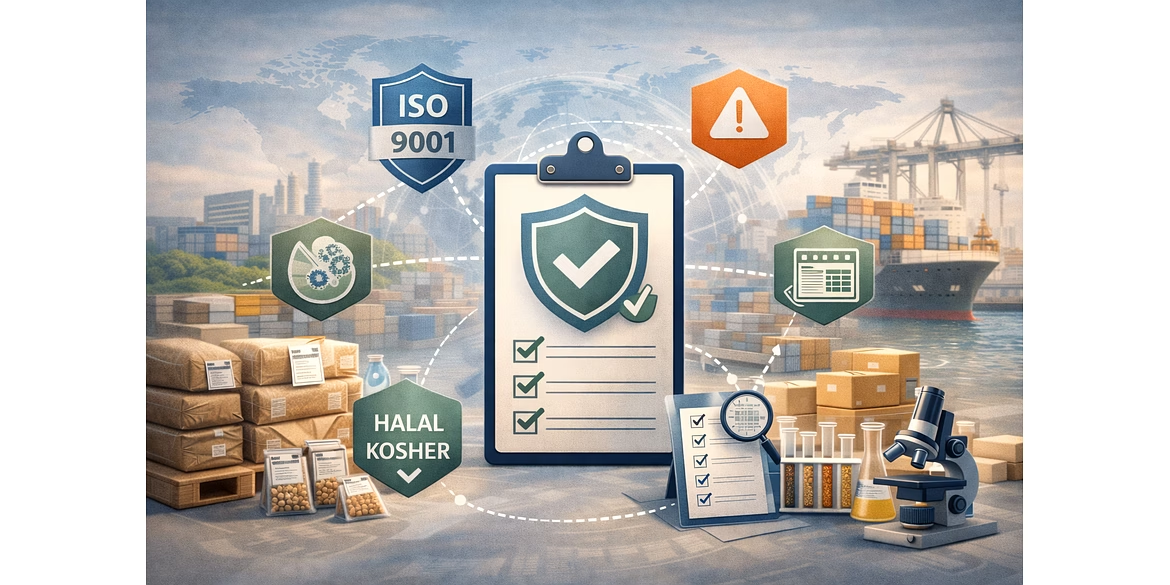

In global food trade, food safety is non-negotiable. International buyers are legally and reputationally accountable for the products they import—making supplier food safety standards a critical procurement criterion.
This guide outlines the essential food safety standards every international buyer should demand from suppliers to ensure compliance, protect consumers, and reduce supply chain risk in global markets.
Why Food Safety Standards Matter in Global Trade
Food safety failures can lead to shipment rejections, product recalls, regulatory penalties, and long-term brand damage. As regulations tighten across international markets, buyers must ensure that suppliers meet documented, auditable, and internationally accepted food safety standards.
For international buyers, strong food safety standards provide:
• Regulatory acceptance at destination ports
• Reduced risk of recalls and penalties
• Consumer safety and brand protection
• Confidence in long-term sourcing
While ISO 9001 is not a food safety standard by itself, it forms the operational backbone of consistent food safety performance. It ensures that processes are standardized, documented, and monitored across the organization.
Why buyers should demand ISO 9001:
• Standardized operating procedures (SOPs)
• Controlled and repeatable processes
• Documented accountability
• Continuous monitoring and improvement
ISO-certified systems ensure food safety controls are applied consistently—not selectively—across all shipments and production cycles.
Mandatory Lab Testing & Batch-Level Verification
Lab testing is one of the most critical safeguards in international food shipments. Buyers should work only with suppliers who integrate lab testing as a mandatory pre-dispatch requirement.
Buyers should demand:
• Batch-level lab testing before shipment
• Microbiological, chemical, and physical tests as applicable
• Documented lab reports linked to each shipment
• Pre-dispatch quality clearance
Lab-tested shipments significantly reduce border rejections, recalls, and regulatory risk in destination markets.
Suppliers must comply with food safety authorities in both the exporting and importing countries. Regulatory compliance should be embedded into daily operations, not treated as a last-minute requirement.
Key compliance expectations include:
• Alignment with food safety authorities (such as FSSAI)
• Documentation readiness for audits and inspections
• Clear understanding of destination-market regulations
• Consistent adherence to regulatory updates
Compliance readiness ensures smoother customs clearance and fewer inspection-related delays.
HALAL & KOSHER Compliance Where Applicable
For many international markets, religious compliance standards are mandatory. Buyers serving these regions must ensure suppliers meet and document HALAL or KOSHER requirements.
Buyers should require:
• HALAL-compliant processing and handling
• KOSHER-compliant sourcing and preparation where required
• Clear certification and documentation
• Segregation and hygiene controls to prevent cross-contamination
Failure in this area can result in complete market exclusion and irreversible brand damage.
Food safety is directly linked to hygiene and workplace discipline. Buyers should verify that suppliers maintain clean, controlled, and auditable manufacturing environments.
Suppliers should demonstrate:
• Controlled and clean manufacturing environments
• Mandatory use of protective gear
• Regular sanitation and safety audits
• Trained staff following hygiene SOPs
Strong hygiene practices reduce contamination risk and improve audit outcomes.
Traceability From Source to Shipment
Traceability is a critical requirement in modern food safety systems. Buyers must be able to trace products from sourcing through processing and export dispatch.
Buyers should insist on:
• Batch-level traceability
• Documentation from sourcing to dispatch
• Ability to isolate and recall specific batches if needed
• Transparent record-keeping
Traceability protects buyers during audits, recalls, and regulatory reviews.
Reliable suppliers maintain audit-ready systems at all times. Documentation should be organized, current, and readily accessible to buyers and regulators.
Audit readiness includes:
• Up-to-date certifications
• Organized quality and safety records
• Transparent documentation sharing
• Responsiveness during buyer or regulatory audits
Audit readiness signals operational maturity and long-term supplier reliability.
Why Food Safety Standards Should Be a Procurement Baseline
Price competitiveness is important—but without strong food safety standards, it creates long-term risk. Food safety should always be a baseline requirement in supplier selection.
For international buyers, demanding strong standards ensures:
• Reduced compliance and legal exposure
• Stable and predictable supply chains
• Alignment with retailer and consumer expectations
• Sustainable, long-term sourcing relationships
1. What food safety standards should international buyers always require?
At a minimum, buyers should require ISO-based quality systems, batch-level lab testing, regulatory compliance, hygiene controls, and traceability.
2. Is ISO 9001 enough for food safety compliance?
ISO 9001 supports consistent processes, but it must be combined with food safety regulations, lab testing, and hygiene controls.
3. Why is lab testing critical for imported food products?
Lab testing verifies safety and compliance before shipment, reducing the risk of rejection, recalls, or penalties.
4. Do all markets require HALAL or KOSHER compliance?
Not all markets, but buyers serving regions where these standards apply must ensure suppliers meet and document compliance.
5. How does traceability protect international buyers?
Traceability allows buyers to identify, isolate, and address issues quickly during audits or recalls.
6. Should buyers conduct supplier audits?
Yes. Supplier audits—remote or on-site—help verify that documented standards are actually followed.
7. Why should food safety standards be non-negotiable in sourcing decisions?
Because failures in food safety can lead to legal action, financial loss, reputational damage, and loss of market access.