


HISAKO International is an ISO 9001 and MSME certified manufacturer and global exporter of rice, spices, pulses, and value-added food products. Based in India with global operations, we deliver lab-tested, food-safe products through reliable internat...
- (+91) 9538000215
- hisako.intl@aol.com
- 1st floor, 1st block, #17, METADESK, 19th H Main, Rajajinagar, , Bengaluru, Karnataka, India. 560010
© 2020 Hisako International OPC pvt ltd. All Rights Reserved
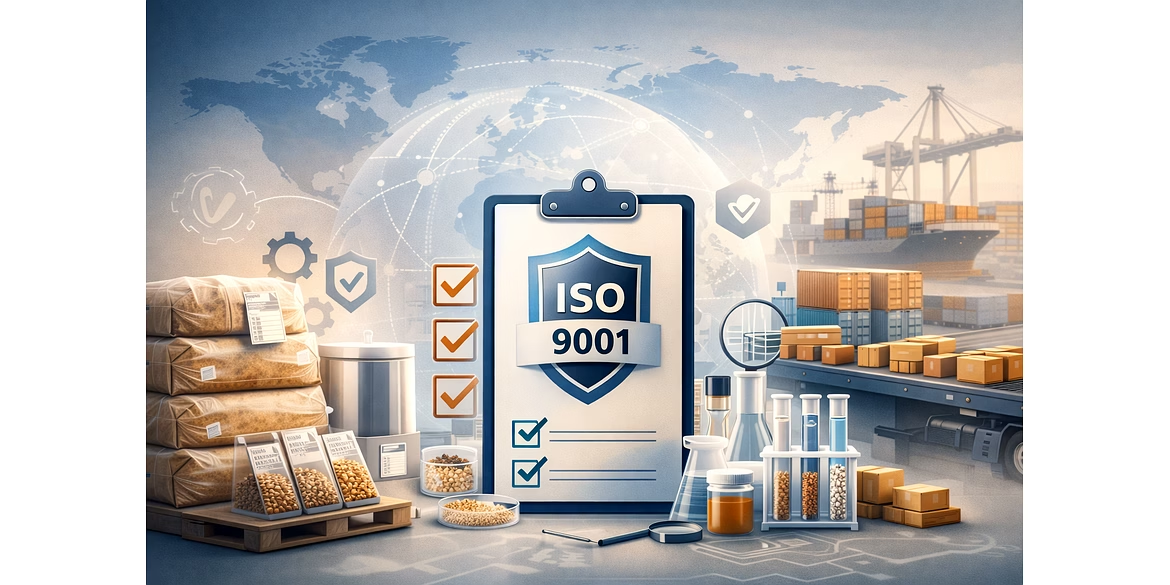

In global food trade, consistency is as critical as compliance. Importers and international buyers depend on exporters who can deliver the same quality, safety, and specifications across every shipment. One of the most reliable indicators of this capability is ISO 9001 certification.
This article explains how ISO 9001 certified manufacturers ensure consistent quality in global food exports and why this quality management standard matters for international buyers focused on risk reduction, compliance readiness, and long-term sourcing.
Understanding ISO 9001 in Food Manufacturing
ISO 9001 is an internationally recognized Quality Management System (QMS) standard. Rather than relying on one-time inspections, it emphasizes process control, documentation, risk management, and continuous improvement.
For food manufacturers and exporters, ISO 9001 ensures that quality is built into every operational stage—from sourcing and processing to packaging and shipment. For importers, ISO 9001 certification signals operational discipline and predictable performance.
For global buyers, ISO 9001 indicates:
• Structured and repeatable processes
• Reduced variability in product quality
• Documented accountability
• Continuous monitoring and improvement
ISO 9001 requires manufacturers to define and follow Standard Operating Procedures (SOPs) for every critical activity. This removes dependency on individual working styles and ensures consistency regardless of personnel or production scale.
In global food exports, standardized processes support:
• Uniform handling of raw materials
• Consistent processing and manufacturing steps
• Controlled packing and labeling
• Predictable shipment readiness
This level of standardization ensures that each export batch meets the same quality benchmarks, which is essential for importers managing branded or regulated food products.
Batch-Level Quality Control & Traceability
One of the strongest advantages of ISO 9001 is its emphasis on batch-level quality control and traceability. Every production batch is identified, documented, monitored, and verified before dispatch.
How this benefits global buyers:
• Clear batch identification and records
• Faster resolution during audits or inspections
• Reduced risk during recalls or quality investigations
• Higher confidence in long-term sourcing
Traceability is essential for meeting international food regulations and supports importer requirements related to transparency, accountability, and audit readiness.
ISO 9001 certified manufacturers integrate lab testing directly into their quality management systems instead of treating it as a standalone activity. Testing becomes a mandatory checkpoint rather than a reactive measure.
Typical quality verification under ISO 9001 includes:
• Batch-level lab testing before shipment
• Verification against buyer specifications
• Documentation of test results
• Formal quality clearance prior to dispatch
This systematic approach ensures food safety, regulatory compliance, and consistent quality across every shipment delivered to international markets.
Risk Management & Preventive Controls
ISO 9001 promotes risk-based thinking, encouraging manufacturers to identify potential quality issues before they affect exports. Preventive action is prioritized over corrective fixes.
In food exports, this includes:
• Identifying contamination risks
• Preventing process deviations
• Managing supplier quality risks
• Ensuring hygiene and safety compliance
Preventive controls significantly reduce shipment rejections, non-conformities, and compliance failures in destination markets.
For international buyers, consistency across multiple shipments is non-negotiable. ISO 9001 certified systems are specifically designed to support repeatability at scale.
This enables:
• Regular containerized shipments
• Mixed product loads with uniform quality
• Scalable volumes without quality dilution
• Long-term sourcing programs
Consistency allows importers to plan inventory confidently and maintain reliable market supply.
Continuous Improvement & Buyer Confidence
ISO 9001 is not a static certification. Manufacturers must continuously review, audit, and improve their processes to maintain compliance.
Continuous improvement delivers:
• Better process efficiency
• Reduced defects and rework
• Improved compliance readiness
• Higher buyer satisfaction over time
For global buyers, this means partnering with exporters who evolve alongside regulatory changes and market expectations.
In international food trade, ISO 9001 is more than a certification—it is a framework for risk mitigation and trust-building.
Importers benefit through:
• Reduced operational and compliance risk
• Predictable quality across shipments
• Strong documentation for audits
• Reliable long-term supply partnerships
Frequently Asked Questions (FAQ)
1. What does ISO 9001 certification mean for food exporters?
It means the exporter follows a structured quality management system that ensures consistency, traceability, and continuous improvement across all operations.
2. How does ISO 9001 help ensure consistent export quality?
By enforcing SOPs, batch controls, documentation, audits, and risk management at every stage of manufacturing and export.
3. Is ISO 9001 mandatory for global food exports?
While not always mandatory, ISO 9001 is highly preferred by international buyers because it reduces quality and compliance risks.
4. Does ISO 9001 replace food safety certifications?
No. ISO 9001 complements food safety standards by ensuring systems and processes are consistently followed.
5. How does ISO 9001 support traceability in food exports?
It requires batch documentation, record keeping, and process tracking from sourcing to dispatch.
6. Can ISO 9001 certified manufacturers support large and repeat shipments?
Yes. ISO systems are designed to support scalable production and regular export volumes without compromising quality.
7. Why do global buyers prefer ISO 9001 certified exporters?
Because they offer predictable quality, strong documentation, compliance readiness, and lower supply chain risk.