


HISAKO International is an ISO 9001 and MSME certified manufacturer and global exporter of rice, spices, pulses, and value-added food products. Based in India with global operations, we deliver lab-tested, food-safe products through reliable internat...
- (+91) 9538000215
- hisako.intl@aol.com
- 1st floor, 1st block, #17, METADESK, 19th H Main, Rajajinagar, , Bengaluru, Karnataka, India. 560010
© 2020 Hisako International OPC pvt ltd. All Rights Reserved
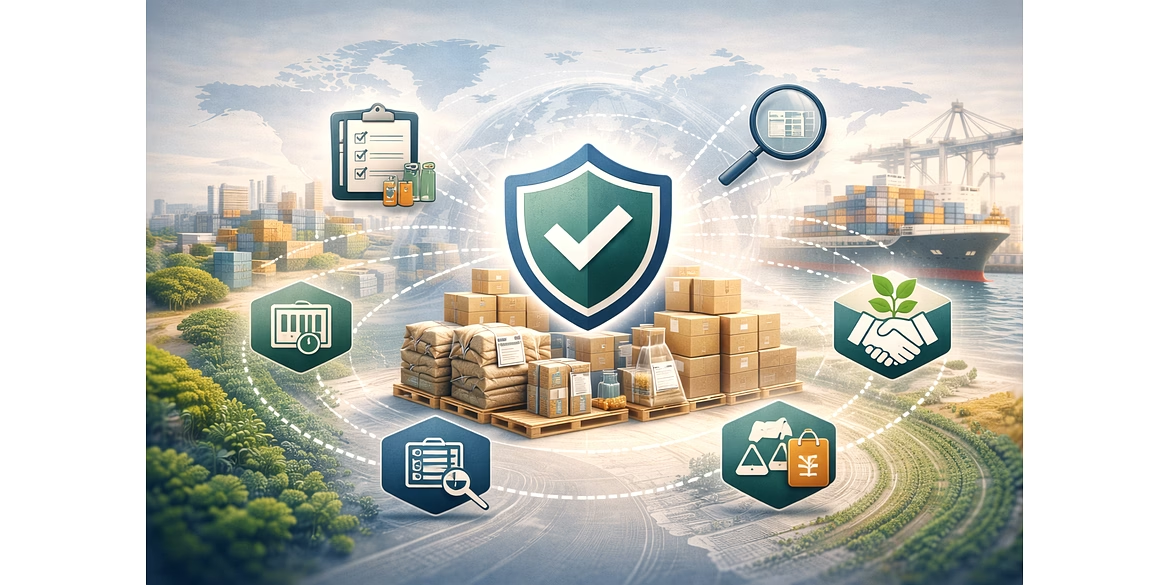

Global agri trade plays a vital role in feeding international markets, but it is also one of the most complex and risk-sensitive sectors. Importers and international buyers face multiple challenges ranging from food safety compliance to supply chain disruptions and regulatory uncertainty.
This article explores the key challenges in global agri trade and explains how reliable exporters address and mitigate these risks to ensure stable, long-term supply relationships.
Challenge 1: Inconsistent Product Quality
One of the most common challenges in agri trade is variation in quality across shipments. Differences in sourcing, handling, storage, or processing can result in inconsistent specifications—creating downstream issues for importers and buyers.
How reliable exporters solve this:
• ISO-aligned quality management systems
• SOP-driven sourcing and manufacturing
• Batch-level quality inspections
• Standardized handling and packing processes
Consistency protects buyers from customer complaints, shipment rejections, and brand damage in destination markets. If you are evaluating partners, consider reviewing a supplier’s quality management system and batch inspection process.
Food safety regulations vary by country and are continuously evolving. Non-compliance can result in shipment rejections, fines, market bans, or costly recall actions. Buyers need exporters who manage compliance proactively.
How reliable exporters solve this:
• Regular lab testing before shipment
• Compliance with food safety authorities
• Documentation aligned with destination-market requirements
• Audit-ready quality and safety records
Strong compliance systems reduce regulatory exposure for importers and improve the probability of smooth clearance at destination ports. Buyers often standardize this through an export compliance checklist.
Challenge 3: Lack of Traceability in Supply Chains
Limited traceability increases risk during audits, inspections, or recalls. Without batch-level visibility, buyers may struggle to isolate issues and demonstrate compliance accountability across international markets.
How reliable exporters solve this:
• Batch-level traceability from sourcing to dispatch
• Clear documentation and record keeping
• Ability to isolate and track individual shipments
• Transparent reporting during audits
Traceability supports accountability and faster issue resolution, which is essential for stable long-term sourcing.
Incorrect or incomplete export documentation is a major driver of shipment delays in global trade. Documentation errors increase clearance time, cause port holds, and raise demurrage and storage costs.
How reliable exporters solve this:
• End-to-end export management
• Accurate preparation of shipping and compliance documents
• Familiarity with customs and regulatory procedures
• Proactive coordination with logistics partners
Efficient documentation management ensures smoother customs clearance and reduces the likelihood of avoidable delays.
Challenge 5: Supply Chain Disruptions & Delivery Delays
Global agri trade is vulnerable to logistical disruptions, seasonal variability, and operational bottlenecks. Delivery delays can trigger stockouts, lost sales, and reduced customer confidence in destination markets.
How reliable exporters solve this:
• Structured production and shipment planning
• Regular containerized shipment programs
• Scalable supply models aligned with buyer demand
• Strong logistics coordination, tracking, and updates
Predictable delivery schedules support stable market supply and improve buyer planning accuracy.
Importers sourcing from multiple suppliers often face coordination challenges, inconsistent standards, fragmented documentation, and uneven quality performance. This increases operational overhead and complicates compliance management.
How reliable exporters solve this:
• Integrated agri trade and food supply solutions
• Ability to manage mixed commodity shipments
• Single-point accountability for quality and logistics
• Simplified procurement and communication
This reduces complexity for buyers and improves consistency across product categories and shipment cycles.
Challenge 7: Ethical Sourcing & ESG Compliance Pressure
Global buyers are increasingly accountable for ESG compliance across their supply chains. Ethical, transparent sourcing is now a procurement baseline, not an optional feature.
How reliable exporters solve this:
• Ethical sourcing and responsible procurement practices
• Safe and hygienic manufacturing environments
• Transparent and compliant operations
• Alignment with sustainability and governance expectations
Responsible exporters help buyers meet ESG requirements while protecting brand reputation and strengthening long-term supply chain resilience.
Price competitiveness matters—but reliability determines long-term success. Exporters who invest in systems, compliance, and transparency create resilient supply chains and reduce trade friction for international buyers.
For global buyers, reliable exporters deliver:
• Reduced regulatory and operational risk
• Consistent quality and supply
• Simplified trade management
• Strong long-term partnerships
Frequently Asked Questions (FAQ)
1. What are the biggest challenges in global agri trade today?
Key challenges include quality inconsistency, food safety compliance, traceability gaps, documentation errors, logistics delays, and ESG pressures.
2. How can exporters reduce quality-related risks for importers?
Through ISO-aligned processes, batch inspections, lab testing, and standardized handling across shipments.
3. Why is compliance management critical in agri exports?
Because non-compliance can lead to shipment rejection, fines, recalls, or loss of market access.
4. How does traceability help global buyers?
It supports audits, recalls, and regulatory inspections by providing clear visibility from sourcing to dispatch.
5. Can reliable exporters help reduce logistics delays?
Yes. Experienced exporters plan shipments, manage documentation, and coordinate logistics to minimize delays.
6. How do integrated exporters simplify procurement?
By offering multiple commodities, mixed shipments, and single-point accountability for quality and logistics.
7. Why do ESG considerations matter in global agri trade?
Because buyers are accountable for ethical, environmental, and governance standards across their supply chains.