


HISAKO International is an ISO 9001 and MSME certified manufacturer and global exporter of rice, spices, pulses, and value-added food products. Based in India with global operations, we deliver lab-tested, food-safe products through reliable internat...
- (+91) 9538000215
- hisako.intl@aol.com
- 1st floor, 1st block, #17, METADESK, 19th H Main, Rajajinagar, , Bengaluru, Karnataka, India. 560010
© 2020 Hisako International OPC pvt ltd. All Rights Reserved
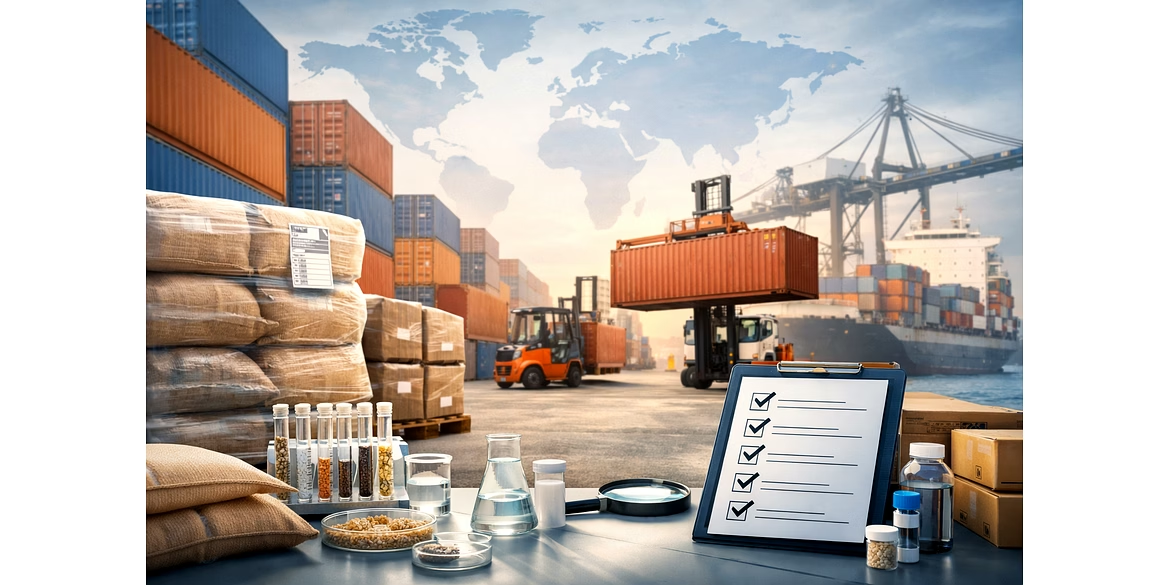

In today’s global food trade environment, choosing the right agri export partner is critical for ensuring product quality, regulatory compliance, supply reliability, and long-term business continuity. For importers and international buyers, the exporter you choose directly impacts operational risk, brand reputation, and market success.
This guide outlines the key factors global importers should evaluate when selecting an agri export partner—and why these criteria matter in international trade.
1. Certified Quality Management Systems
One of the first indicators of a reliable agri export partner is a recognized quality management system. Certifications such as ISO 9001:2015 demonstrate that the exporter follows structured, documented, and audited processes—an essential baseline for global importers who need repeatable, predictable outcomes across shipments.
For international buyers, a robust quality management system supports consistent sourcing, reduces batch variability, and strengthens supply reliability. It also lowers operational risk by creating clear accountability and process control across procurement, processing, and dispatch.
Why this matters for importers:
• Ensures consistency across batches
• Reduces variability in product quality
• Supports repeat and long-term sourcing
• Minimizes operational and compliance risks
Importers should always verify that quality systems are implemented in daily operations—not just on paper. Ask for audit summaries, process SOPs, and evidence of corrective actions to validate the exporter’s quality culture.
Global food trade requires strict adherence to regional and international food safety regulations. A dependable agri export partner must align with market-specific compliance requirements to help importers reduce the risk of border holds, shipment rejections, penalties, or recalls.
Key standards importers should look for:
• Food safety authority compliance (such as FSSAI)
• HALAL certification for applicable markets
• KOSHER compliance where required
• Documented lab testing and approvals
When evaluating an exporter, ask how compliance is built into their workflows: supplier onboarding, raw material checks, in-process controls, packaging, labeling, and export documentation. Strong compliance practices make international trade smoother and more predictable for global importers.
3. Lab Testing & Batch-Level Quality Control
Lab testing is not optional in international food trade—it is essential. Importers should prioritize agri exporters who conduct regular, documented lab testing before shipment, supported by batch-level quality control and clear release protocols.
Strong quality control includes:
• Batch-level testing
• Physical, chemical, and microbiological checks
• Pre-dispatch quality clearance
• Full traceability from sourcing to shipment
This approach supports food safety standards, improves regulatory acceptance, and boosts buyer confidence. For international buyers, consistent lab testing reduces the risk of non-compliance and protects brand reputation in destination markets.
An experienced agri export partner understands the complexities of international trade, including documentation, customs processes, and logistics coordination. This matters because even high-quality agricultural products can face costly delays if export paperwork or shipping procedures are incomplete or inaccurate.
Global trade readiness includes:
• End-to-end export management
• Accurate export documentation
• Knowledge of international shipping norms
• Ability to support repeat and large-volume shipments
Importers benefit from exporters who can proactively coordinate freight timelines, document requirements, and destination-specific compliance—reducing delays, demurrage costs, and operational friction across global food trade lanes.
5. Consistent Supply & Scalability
Reliability is one of the most important factors for global importers. Beyond a single successful shipment, international buyers need an agri export partner that can support regular schedules, predictable lead times, and scalable volumes as demand grows.
Key indicators of supply reliability:
• Structured production planning
• Ability to handle mixed commodity shipments
• Regular containerized export programs
• Capacity to scale with market demand
Consistent supply improves inventory planning, reduces stock-out risk, and strengthens market presence in destination regions. For importers managing multiple SKUs, supply scalability and dependable dispatch cycles are key to long-term success.
Transparency builds trust in long-term trade relationships. Global importers should work with agri exporters who provide clear documentation, transparent timelines, and full traceability—especially when the destination market requires audits, recalls preparedness, or origin verification.
What transparency looks like:
• Traceability from sourcing to dispatch
• Clear batch documentation
• Open communication on quality and timelines
• Auditable manufacturing and export processes
This reduces risk and strengthens buyer–supplier partnerships by improving visibility into sourcing, quality control, and shipment readiness.
7. Ethical Practices & Long-Term Partnership Mindset
Modern global buyers increasingly value exporters who operate responsibly and ethically. Beyond pricing, importers should assess the exporter’s business values, supplier governance, and long-term partnership mindset—especially when ESG expectations and responsible sourcing policies are part of procurement standards.
Signs of a long-term partner:
• Ethical sourcing and procurement
• Responsible manufacturing practices
• People-first and safety-focused culture
• Commitment to long-term collaboration over short-term gains
Ethical, process-driven exporters contribute to stable, sustainable supply chains and reduce reputational risk. For international buyers aiming to secure dependable agri exports, partnering with values-aligned suppliers supports continuity and resilience in global food trade.
1. Why is choosing the right agri export partner so important for importers?
The exporter directly impacts product quality, compliance, delivery reliability, and brand reputation in the destination market—making partner selection a key driver of global trade risk and success.
2. What certifications should importers look for in an agri exporter?
Importers should look for ISO 9001 certification and compliance with relevant food safety standards such as FSSAI, HALAL, and KOSHER, depending on the requirements of the destination market and buyer specifications.
3. How does lab testing benefit international buyers?
Lab testing supports food safety and regulatory compliance, verifies batch consistency, and reduces the risk of shipment rejection or recalls—protecting both supply chains and brand reputation.
4. Can experienced exporters reduce trade-related risks?
Yes. Exporters with strong global trade experience manage documentation, logistics, and compliance more effectively, which reduces delays, errors, and avoidable costs for importers.
5. Why is traceability important in agri exports?
Traceability enables importers to track products from source to shipment, supporting quality assurance, audits, and regulatory requirements while improving transparency in global food trade.
6. Should importers prioritize long-term partnerships over one-time suppliers?
Yes. Long-term partnerships provide consistent quality, stable supply reliability, and stronger alignment with evolving market requirements and compliance expectations.
7. How do ethical practices impact global trade relationships?
Ethical practices strengthen trust, support sustainability goals, and align exporters with modern procurement and ESG expectations—helping build resilient, long-term buyer–supplier partnerships.
Final Thought for Global Importers
Selecting the right agri export partner goes beyond pricing. Importers should evaluate quality systems, food safety compliance, lab testing rigor, export readiness, supply scalability, and traceability to reduce risk and ensure long-term success in global food trade. A reliable agricultural exporter becomes an extension of your supply chain—supporting consistency, regulatory confidence, and sustainable growth in destination markets.