


HISAKO International is an ISO 9001 and MSME certified manufacturer and global exporter of rice, spices, pulses, and value-added food products. Based in India with global operations, we deliver lab-tested, food-safe products through reliable internat...
- (+91) 9538000215
- hisako.intl@aol.com
- 1st floor, 1st block, #17, METADESK, 19th H Main, Rajajinagar, , Bengaluru, Karnataka, India. 560010
© 2020 Hisako International OPC pvt ltd. All Rights Reserved
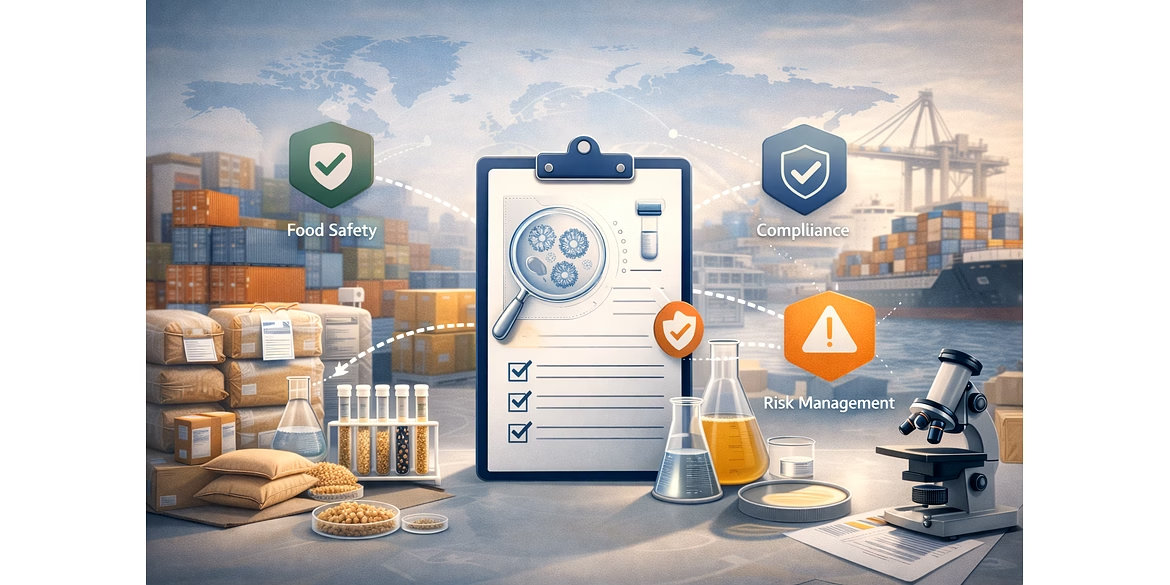

In international food trade, lab testing is not optional—it is essential. For importers and regulators, lab-tested shipments form the foundation of food safety, regulatory compliance, and effective risk management. A single quality failure can result in shipment rejection, financial loss, reputational damage, or regulatory penalties.
This article explains why lab testing is critical for international food shipments and how it protects global buyers across the entire supply chain—from origin to destination markets.
The Growing Importance of Food Safety in Global Trade
Food safety regulations have become increasingly stringent across global markets. Importing countries now require documented proof that food products meet health, safety, and quality standards before they are approved for entry.
For importers, this environment means:
• Higher regulatory scrutiny
• Mandatory quality verification
• Increased accountability for food safety
Lab testing provides measurable, objective evidence that products are safe, compliant, and fit for consumption in international markets.
Lab testing involves the scientific analysis of food products to verify compliance with safety, quality, and regulatory standards before shipment. These tests are conducted by approved laboratories using validated methods.
Typical lab tests include:
• Microbiological testing
• Chemical residue analysis
• Physical quality checks
• Moisture and contamination testing
These tests confirm that food products meet both exporting and importing country requirements before they enter global supply chains.
Risk Reduction for Importers & Buyers
One of the biggest advantages of lab testing is risk mitigation. Importers depend on exporters to identify and eliminate quality or safety risks before products leave the origin country.
Lab testing helps prevent:
• Shipment rejections at destination ports
• Regulatory penalties or fines
• Product recalls
• Damage to brand reputation
• Supply chain disruptions
For global buyers, lab-tested shipments significantly reduce uncertainty and improve confidence in international sourcing decisions.
Different countries enforce different food safety regulations. Lab testing ensures food products align with international frameworks as well as destination-specific compliance requirements.
Compliance typically includes:
• Food safety authority requirements (such as FSSAI)
• HALAL compliance for applicable markets
• KOSHER requirements where necessary
• Alignment with importer specifications
Well-documented lab results simplify customs clearance, inspections, and regulatory approvals at destination ports.
Batch-Level Quality Assurance & Traceability
Effective lab testing is conducted at the batch level, ensuring that every shipment meets the same quality benchmarks. This approach is critical for international buyers managing multiple suppliers and markets.
Batch-level testing supports:
• Traceability from sourcing to dispatch
• Clear documentation for audits
• Faster issue resolution if concerns arise
• Stronger buyer confidence
Traceability is essential for compliance, recall preparedness, and transparency in global food trade.
Importers prefer exporters who deliver consistent, lab-tested quality across shipments. This reliability enables long-term sourcing agreements and stable market supply.
Benefits for long-term partnerships include:
• Predictable quality outcomes
• Reduced inspection failures
• Lower compliance risk
• Stronger buyer–supplier trust
Lab testing transforms food exports from transactional trade into dependable, long-term supply relationships.
Lab Testing as Part of ISO-Driven Quality Systems
In ISO 9001-certified operations, lab testing is integrated into the quality management system rather than treated as an afterthought. Testing becomes a planned, repeatable, and review-driven process.
This integration ensures:
• Testing is planned, documented, and repeatable
• Results are reviewed before dispatch
• Non-conformities are addressed systematically
• Continuous improvement in quality outcomes
This structured approach benefits exporters and importers by improving consistency, compliance, and trust.
Regulators and institutional buyers increasingly require documented proof of food safety and quality. Lab reports act as objective evidence that products meet required standards.
For buyers, lab testing provides:
• Assurance of food safety
• Confidence in regulatory acceptance
• Protection against liability risks
• Alignment with internal quality policies
Frequently Asked Questions (FAQ)
1. Why is lab testing mandatory for international food shipments?
Lab testing verifies food safety and compliance, helping prevent shipment rejection, recalls, and regulatory penalties.
2. What types of tests are conducted on food export shipments?
Tests typically include microbiological, chemical, and physical quality checks, depending on product type and destination requirements.
3. Is lab testing required for every shipment?
Yes. Reputable exporters conduct batch-level lab testing to ensure consistency and compliance across all shipments.
4. How does lab testing protect importers?
It identifies safety or quality issues before shipment, reducing the risk of rejection and regulatory action at destination ports.
5. Does lab testing replace certifications like ISO or HALAL?
No. Lab testing complements certifications by verifying that certified systems produce compliant outcomes.
6. How does lab testing support traceability?
Lab reports are linked to specific batches, enabling traceability from sourcing to dispatch and supporting audits.
7. Why do global buyers prefer exporters with strong lab testing systems?
Because lab testing ensures consistent quality, regulatory confidence, and reduced operational risk across international supply chains.